 Written By:
 Not all carbon offsets work the same way. Some protect forests or build wind farms, while others restore mangroves or pull carbon out of the air with new technology.
This guide breaks down the main types of carbon offset projects, how each works, and real examples of projects in action.
Key Takeaways
|
What Are Carbon Offset Projects?
Carbon offset projects are climate projects that reduce or remove the greenhouse gas emissions driving climate change. They come in many forms, from restoring wetlands to turning waste into energy. And they’re found all over the world, from tropical rainforests to rural farmland to busy cities.
The emissions reductions or removals created by carbon offset projects are measured and checked by independent experts. Once this happens, one carbon credit is issued for every metric ton. When you buy those credits, your money helps pay for the project’s work.
The main types of carbon offset projects include forest, energy, waste and industrial, blue and teal carbon, agricultural, and technological carbon removal projects.
Want to see how different carbon offset projects compare at a glance? Explore our Carbon Offset Project Comparison Guide for a side-by-side look at project types, climate strategies, and key differences.
Avoidance vs. Removal Projects
Carbon offset projects fall into two main categories: avoidance and removal. Avoidance projects prevent future emissions from occurring—for example, building a wind farm to replace fossil fuel energy or protecting forests from being cleared. On the other hand, removal projects draw down carbon already in the atmosphere through methods like reforestation or direct air capture.
The following sections highlight common types of carbon offset projects that achieve either avoidance, removal, or a combination of both.
Forest Carbon Offset Projects
Forests help fight climate change by absorbing and storing carbon through photosynthesis. Forest-based carbon offset projects tap into this power by protecting, restoring, or improving the management of forests to maximize their climate benefits.
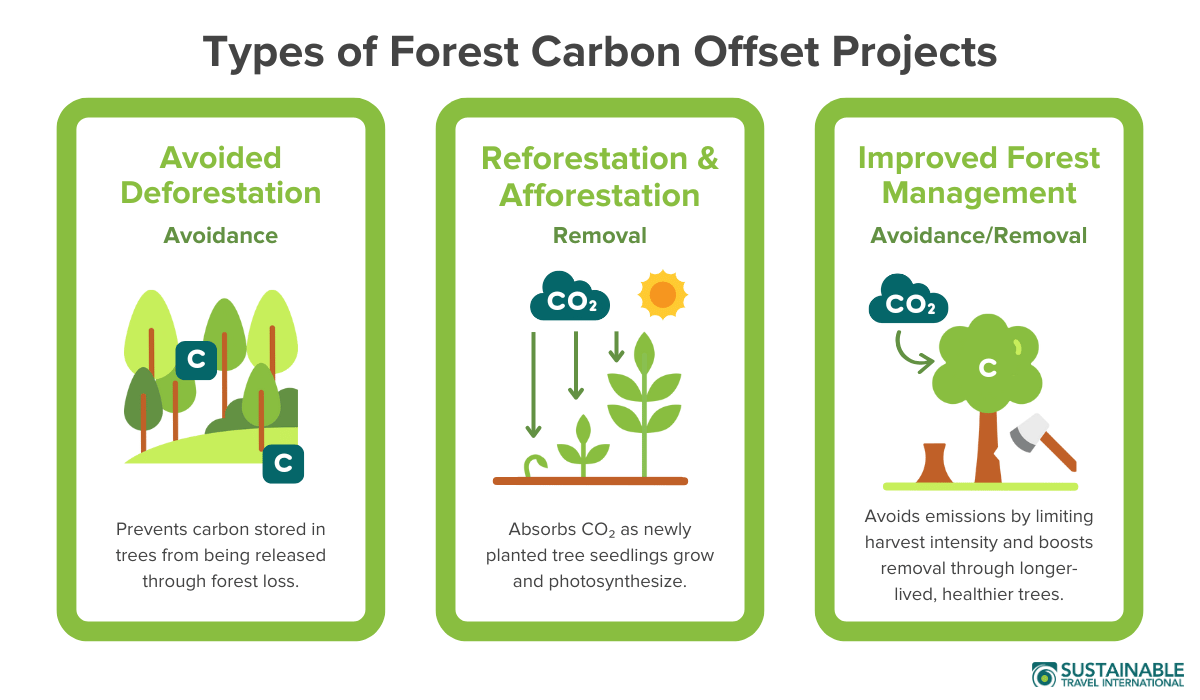
There are three main types of forest carbon offset projects:
- Avoided deforestation projects prevent forest loss from threats like logging, mining, or agricultural expansion, protecting trees and ecosystems that would otherwise be at risk. For example, the Yaeda-Eyasi project protects the ancestral lands of Indigenous communities in Tanzania from being converted into cropland by encroachers.
- Reforestation restores tree cover in areas affected by deforestation or natural disturbances, while afforestation creates new forests on land that has never been forested or hasn’t had tree cover in decades. For example, the Green Trees project is restoring one million acres of farmland into hardwood forest in the Lower Mississippi Valley.
- Improved forest management projects enhance carbon storage by adopting practices like extending harvest cycles, allowing trees to grow larger and absorb more carbon. For example, the Blandin Native American Hardwoods project enhances carbon sequestration in Minnesota’s pulp and sawlog forests using practices that emulate natural ecological patterns and maintain tree diversity.
To put it in perspective, the emissions from a round-trip flight between New York and London are comparable to what 25 tree seedlings would absorb over 10 years—or what could be avoided by protecting 1.5 acres (0.9 hectares) of forest from deforestation for one year.
Energy Carbon Offset Projects
Energy carbon offset projects reduce greenhouse gas emissions by changing how energy is produced, used, and sourced. These projects replace fossil fuel-based power with clean, renewable energy, recover energy from organic waste, and reduce demand through more efficient appliances and systems.
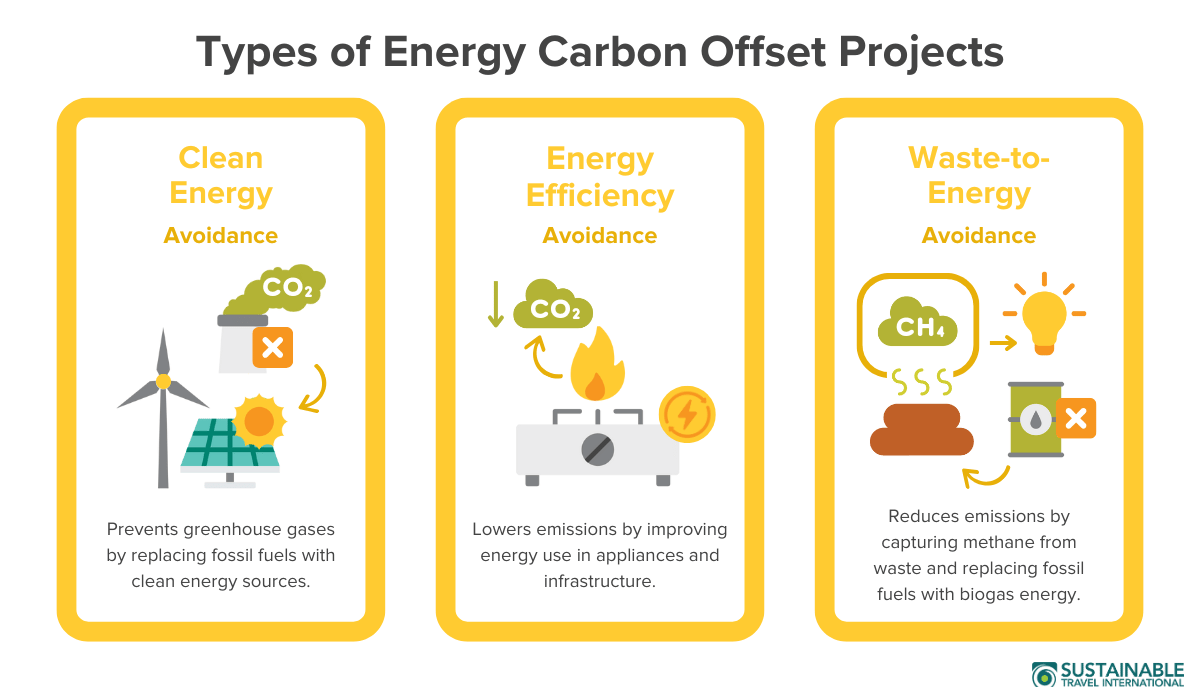
The following are the main types of energy carbon offset projects:
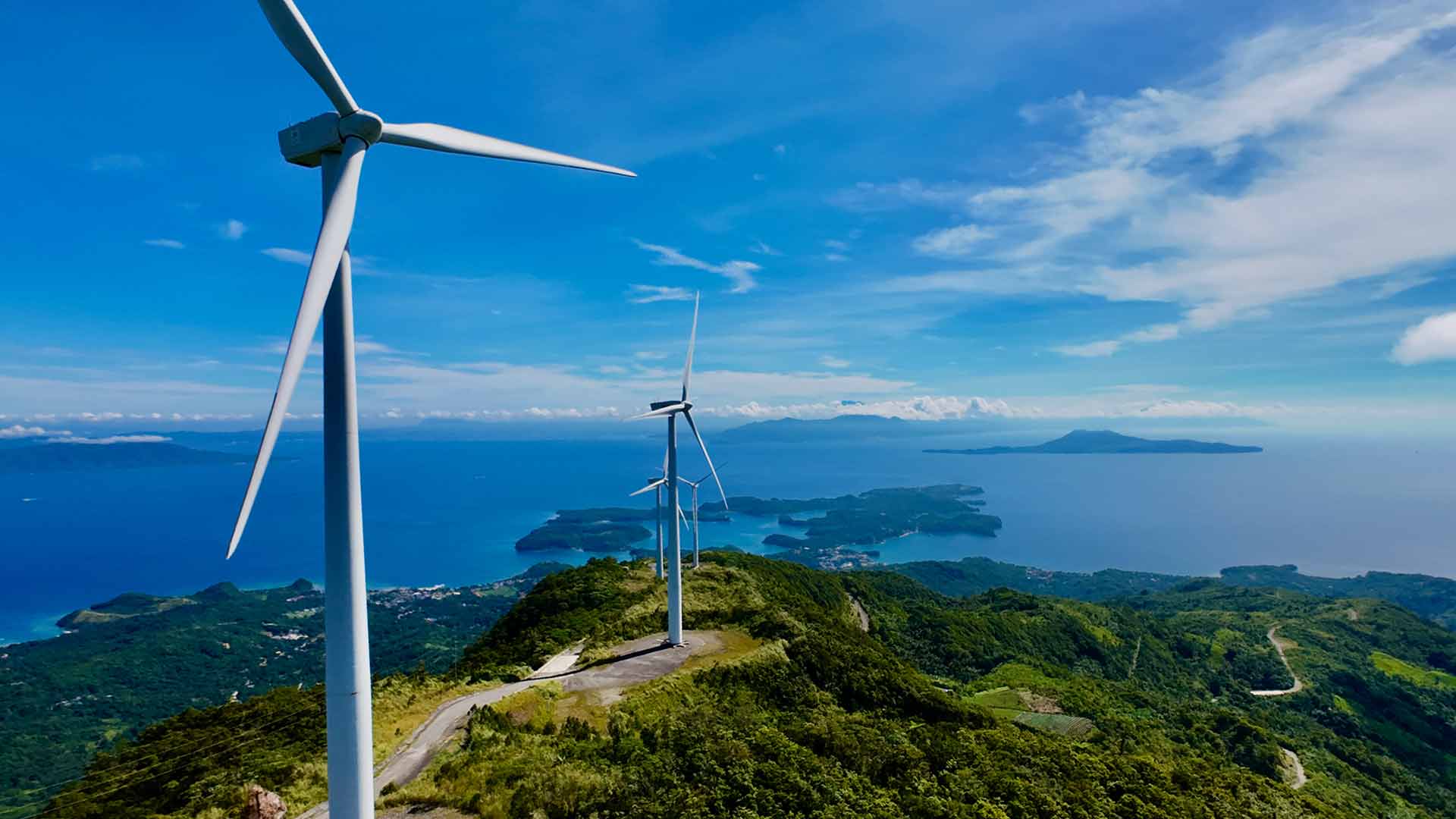
- Clean energy projects reduce emissions by replacing fossil fuel-based power with clean, renewable sources like wind, solar, or hydro. Unlike fossil fuel plants, renewable energy avoids carbon and pollutant emissions. For example, the Larimar Wind Farm in the Dominican Republic harnesses sea breezes to supply clean electricity to the grid, reducing dependence on imported fossil fuels.
- Waste-to-energy projects reduce emissions by converting non-recyclable waste into usable energy through various technologies. These projects transform waste into energy carriers, like gaseous or liquid fuels, which can generate electricity or heat, displacing fossil or biomass fuels. For example, the Vietnam Biogas project installs digesters that convert animal manure into biogas, which families use for cooking and lighting. Another example is the Santa Marta Landfill Gas project, which captures methane from a landfill in Santiago, Chile, and converts it into electricity.
- Energy efficiency projects reduce the energy needed for a task, lowering the use of biomass and fossil fuels. These projects can range from community-level initiatives targeting household appliances to industry-level improvements in buildings and transportation. For example, the Garo Clean Cookstoves project in India replaces traditional stoves with more efficient models that use less firewood, cutting emissions and easing pressure on nearby forests.
For comparison, the emissions from that same round-trip flight from New York to London are roughly equivalent to the emissions avoided by not burning 1,666 pounds (756 kilograms) of coal or 147 gallons (556 liters) of diesel.
Waste Disposal and Industrial Processes Carbon Offset Projects
Beyond waste-to-energy initiatives, other carbon offset projects focus on managing waste and industrial byproducts to reduce greenhouse gas emissions.
Waste disposal projects include capturing and destroying methane released from rotting organic material, recycling to avoid emissions from producing new materials, and composting to stop methane from forming in the first place. For example, the Quanzhou Canhua PET Recycling Project in China turns used plastic drink bottles into new plastic flakes, cutting carbon emissions by avoiding the need to make new plastic from oil and gas.
For comparison, the emissions from that same round-trip flight from New York to London are roughly equivalent to the emissions avoided by recycling 128 bags of trash instead of sending them to a landfill.
Industrial processes carbon offset projects tackle pollution from manufacturing and chemical processes by destroying or replacing potent greenhouse gases. These projects might capture methane leaking from coal mines, destroy nitrous oxide produced during chemical manufacturing, or replace high-emission refrigerants with cleaner alternatives.
Blue and Teal Carbon Offset Projects
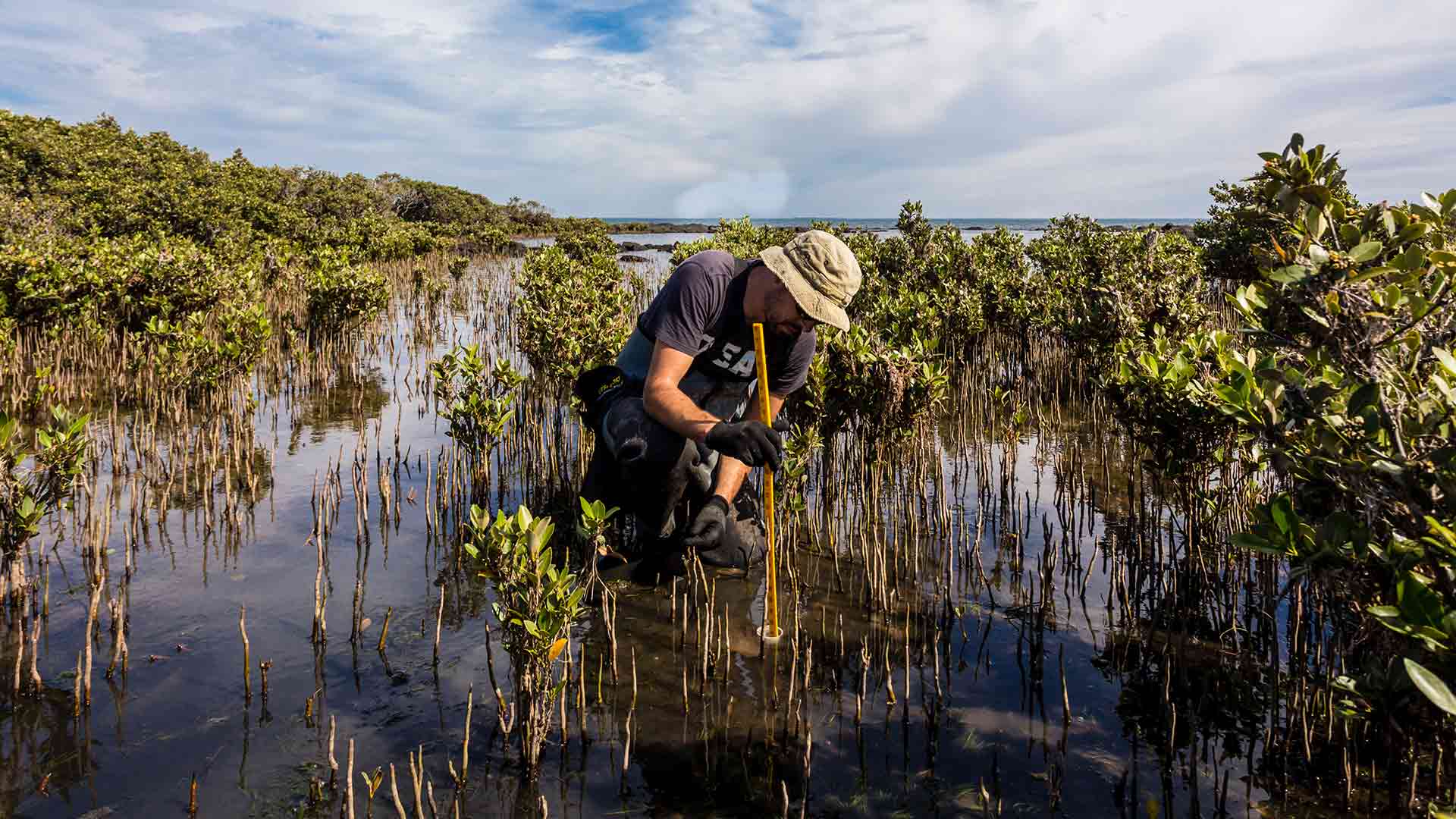
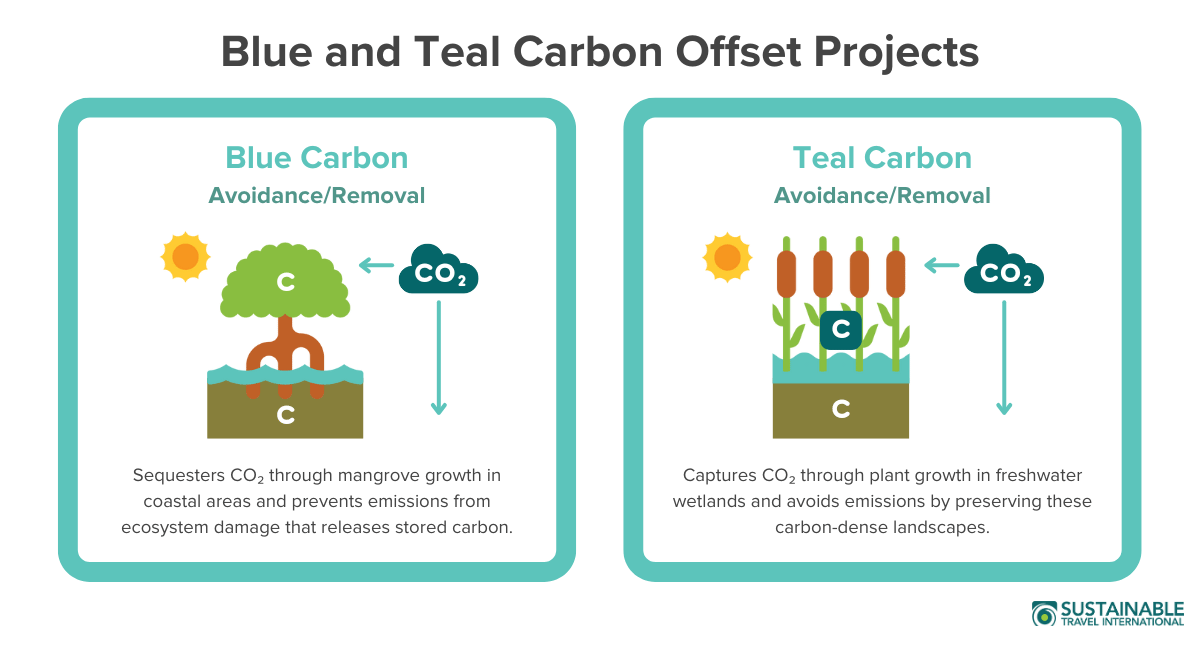
Blue carbon offset projects protect and restore coastal ecosystems like mangroves, while teal carbon projects focus on freshwater wetlands. Though they cover less area than forests, these ecosystems can absorb carbon up to 10 times faster. They can also store twice as much carbon per equivalent area—primarily in soils, where slow decomposition traps it for thousands of years.
An example of a blue carbon project is Mikoko Pamoja, a community-based initiative conserving and restoring mangroves along Kenya’s southern coast. A teal carbon example is Rimba Raya, which protects Indonesia’s peat swamp forests—a critical habitat for rehabilitated orangutans, once slated for conversion to palm oil plantations.
Agriculture
Agricultural carbon offset projects reduce emissions through land and livestock management strategies that target high-emission practices and increase carbon storage in soil and vegetation.
- Sustainable crop practices reduce greenhouse gas emissions by lowering the use of synthetic fertilizers and other high-emission inputs and improving crop management techniques that minimize nitrous oxide emissions.
- Agroforestry projects remove carbon from the atmosphere by incorporating trees into agricultural systems, which store carbon in their biomass over time.
- Livestock and grazing practices reduce methane and nitrous oxide emissions through improved feeding strategies, manure management systems like biodigesters, and grazing approaches that enhance carbon uptake in grassland soils and reduce land degradation.
- Soil carbon sequestration projects increase the carbon held underground by improving how plants interact with soil microbes or adopting regenerative land management practices.
Technological Carbon Removal
Technological carbon removal uses engineered solutions to capture and store carbon in long-lasting forms. For example, direct air capture (DAC) uses machines and chemical processes to pull carbon dioxide directly from the air. The captured CO₂ is stored underground for permanent removal or used in products like fuels and concrete.
In addition to purely engineered solutions, technology can also enhance natural carbon removal processes. These approaches accelerate or strengthen nature’s ability to sequester carbon:
- Biochar projects stabilize carbon from organic materials by converting them into a solid charcoal-like substance using high heat and low oxygen. This stable carbon is then added to the soil, where it can remain locked away for hundreds of years. In Thailand, the WongPhai Bamboo Biochar project turns bamboo waste into biochar and applies it to fields to store carbon permanently.
- Enhanced weathering projects remove carbon dioxide from the air by spreading crushed rocks like basalt over land, where they chemically react with CO₂ and water to form stable minerals that store carbon permanently.
- Some soil carbon sequestration projects may utilize biological additives or treatments that accelerate carbon storage. For example, the Rootella project in the U.S. Corn Belt applies mycorrhizal fungi to crops at planting, boosting the plants’ ability to absorb carbon and store it in the soil.
How Many Carbon Credits Have Been Retired By Project Type?
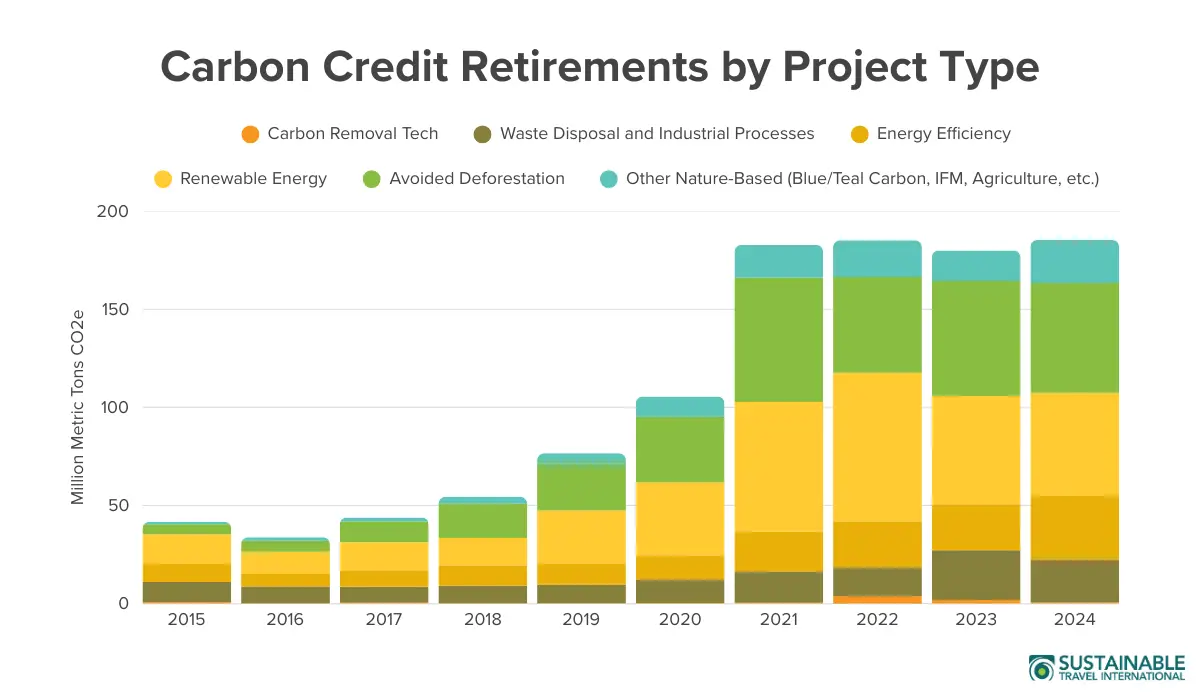
Now that you’ve explored the range of carbon offset project types, it’s helpful to understand how each contributes to global carbon offsetting efforts.
The chart below shows the number of carbon credits that have been retired each year by project type, reflecting which activities account for the majority of offsets. This breakdown highlights the impact of different solutions, the growth of the carbon market, and trends in how the world supports carbon offsets. While avoided deforestation and renewable energy projects have dominated the market for years, other categories like blue carbon and innovative tech are beginning to grow more prevalent. Together, these approaches provide a toolkit for reducing and removing emissions at scale, including emissions that are difficult or impossible to eliminate at their source.
What Makes a Carbon Offset Project High Quality?
Not all carbon offset projects deliver the same climate impact. High-quality projects are verified against independent standards and pass a few key tests.
Their results wouldn’t have happened without carbon credit funding; their carbon stays out of the atmosphere for the long term, and they don’t simply shift emissions somewhere else. Many also deliver benefits for local communities and ecosystems.
Learn more about how to choose high-quality carbon offsets in this blog post.
How Much Do Different Carbon Offset Projects Cost?
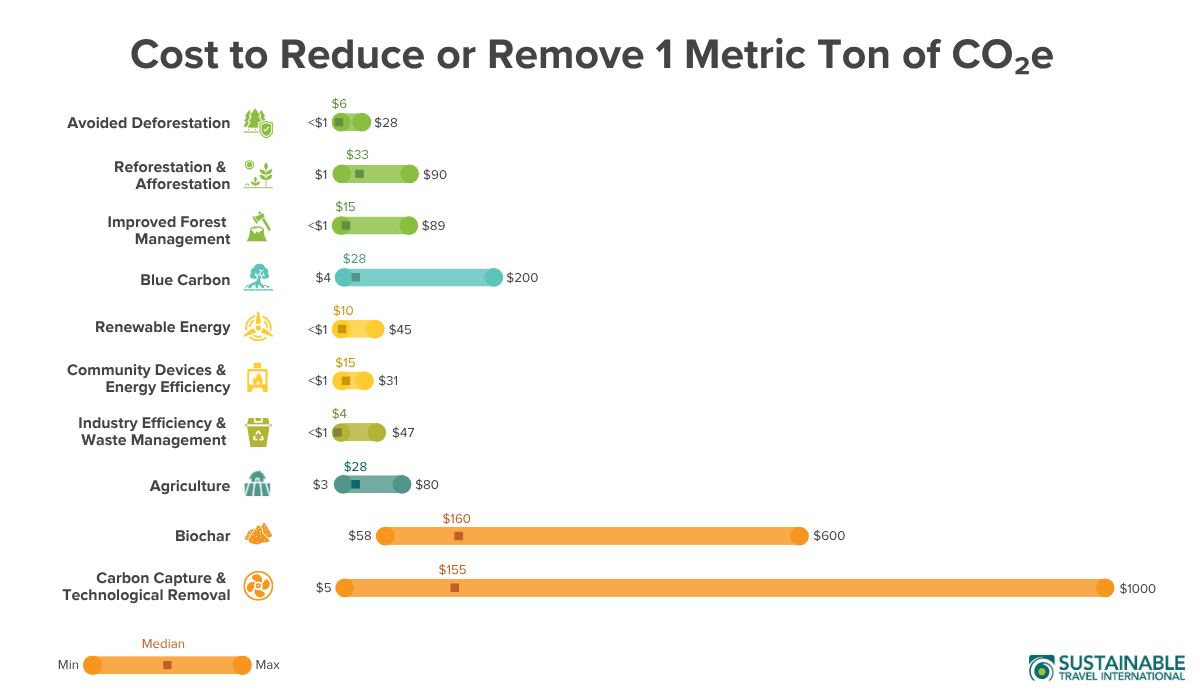
Carbon credit prices vary a lot, from about $1 to $1,000 per metric ton. The price depends on things like the type of project, where it’s located, how big it is, and how much it’s in demand. Projects that are independently verified and bring extra benefits to local communities and nature usually cost more.
The type and size of a project make a big difference. Large wind and solar projects can produce credits at a lower price because they’re well established. Smaller projects cost more to run and produce fewer credits, so their credits tend to be pricier. Newer carbon removal technologies, like machines that pull carbon out of the air, are also more expensive because they’re still getting started.
Explore Our Carbon Offset Project Portfolio
When you purchase carbon offsets with Sustainable Travel International, your contribution supports a diverse mix of projects, including forestry, energy, blue and teal carbon, and carbon capture and removal. Each type of project tackles emissions in a different way, so a blended portfolio lets you support climate action on several fronts at once.
Every project is hand-selected through our internal due diligence process, which adds another layer of review beyond certification standards. Visit our Climate Impact Portfolio to see how your contribution is allocated and the environmental and community benefits these projects deliver.