 Written By:
 Not all carbon offsets are created equal. In recent years, growing scrutiny has highlighted concerns about the quality of some carbon credits, particularly around whether the claimed emissions reductions or removals are real, measurable, and permanent.
This guide outlines the key principles of quality assurance and how to identify credible carbon offset projects.
Key Takeaways
|
Carbon Offset Verification Standards
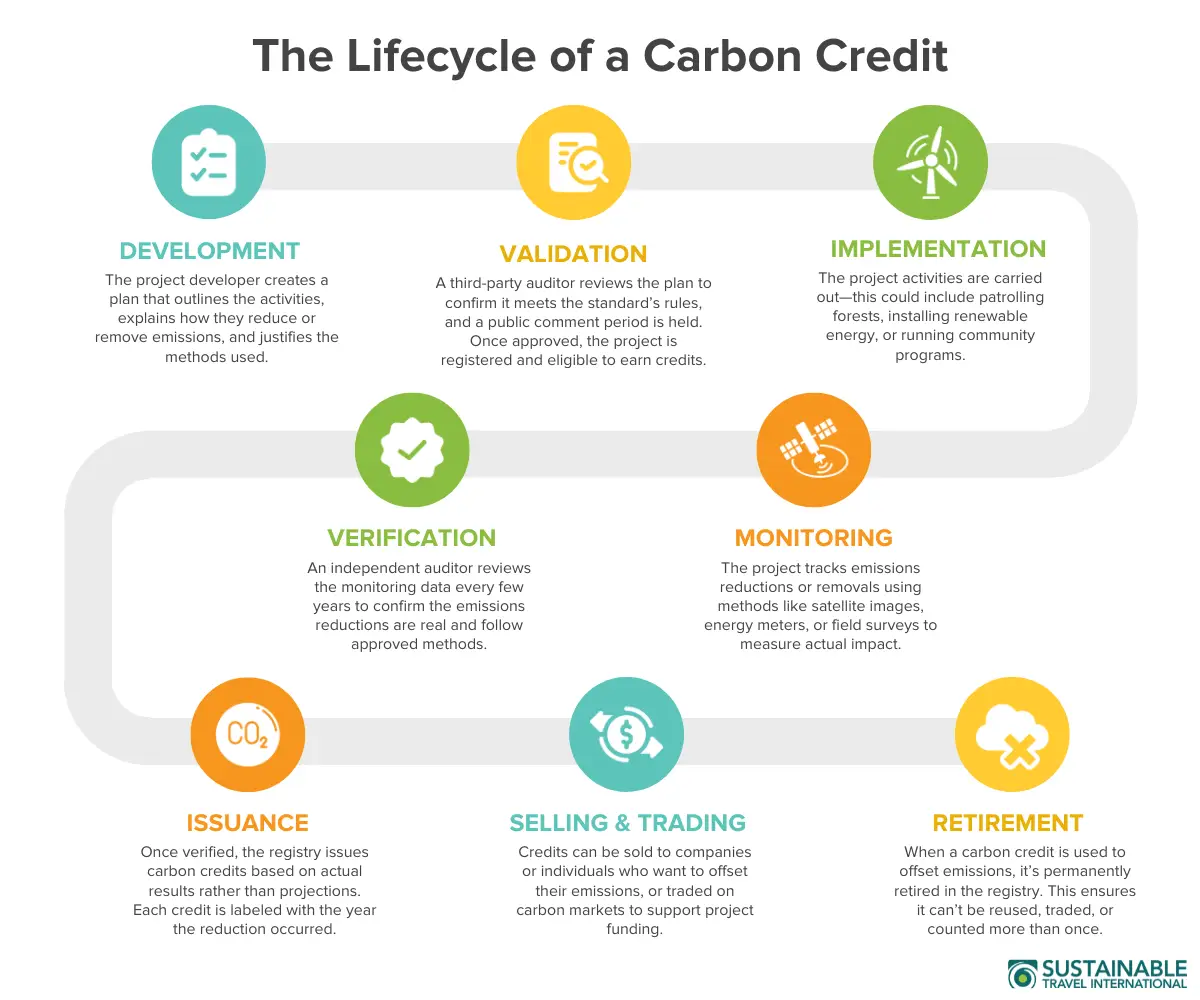
Independent verification standards uphold the integrity of the voluntary carbon market by establishing clear rules for how projects generate, measure, and verify emissions reductions. To issue legitimate carbon credits, projects must comply with the methodologies defined by the standards and undergo impartial assessment by a third-party auditor. This helps prevent inflated credit claims and fraud and fosters transparency and trust among buyers, ensuring the credits deliver real environmental benefits.
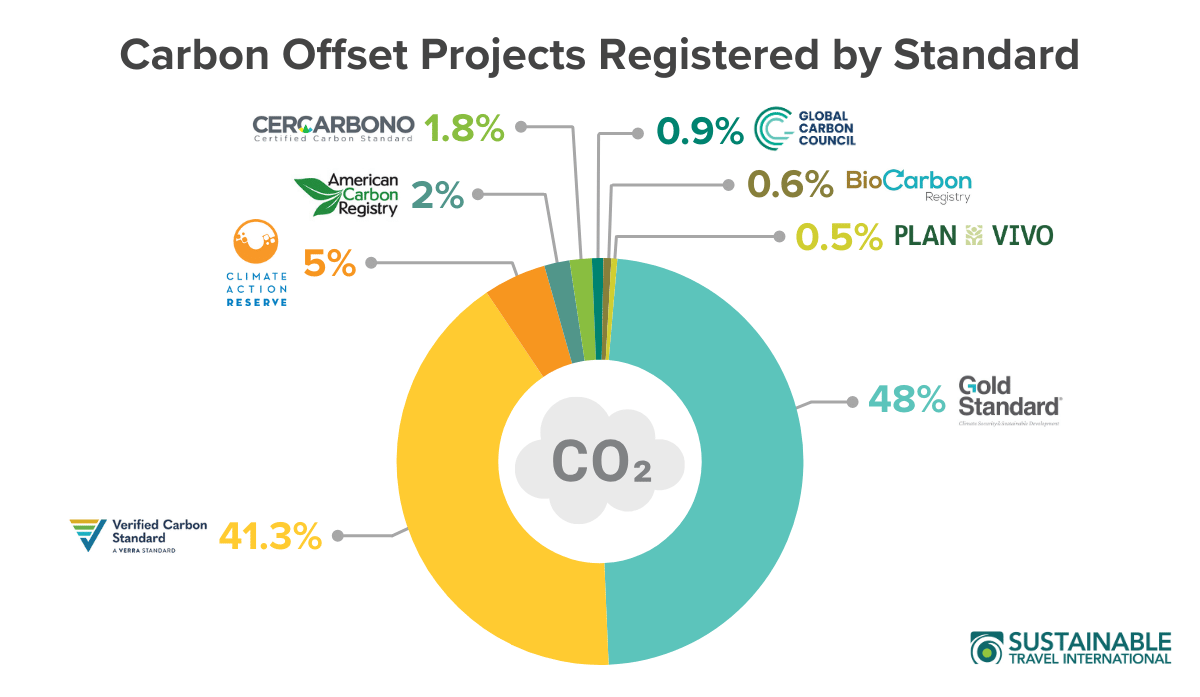
The main verification standards for carbon offsets are Verra’s Verified Carbon Standard (VCS) and Gold Standard. Other standards include the American Carbon Registry (ACR), Climate Action Reserve (CAR), and Plan Vivo. Newer standards, such as Puro.earth and Carbon Standards International, have also emerged to support innovative carbon removal technologies.
Each standard takes a slightly different approach, focusing on various project types and areas. Here’s how the most widely used carbon offset programs compare.
Verified Carbon Standard (VCS)
- Year Established: 2007
- Size: 2400+ projects registered, 1.3 billion carbon credits issued
- Project Types: Covers a wide range of projects, with renewable energy making up most of the VCS portfolio, followed by waste disposal, industrial energy efficiency, reforestation, waste-to-energy, and avoided deforestation projects. It includes fewer industrial processes, improved forest management, blue carbon, teal carbon, biochar, soil carbon, and agriculture projects.
- Project Locations: Global, with a strong concentration in Asia, Latin America, and Africa. Additional projects are registered in Europe, North America, and Oceania.
- Co-Benefits Certification: Co-benefits may be certified through separate supplementary standards including the Sustainable Development Verified Impact Standard (SD VISta) which verifies contributions toward the UN Sustainable Development Goals (SDGs) and the Climate, Community & Biodiversity (CCB) Standards which verifies nature-based projects (particularly forestry) that deliver measurable climate, community, and biodiversity benefits.
- Notable Characteristics: Largest registry in the voluntary carbon market.
Gold Standard
- Year Established: 2003
- Size: Roughly 2,800 projects registered, 397 million carbon credits issued
- Project Types: Gold Standard’s portfolio is dominated by community energy-efficiency and renewable-energy projects. It also includes waste-to-energy, afforestation and reforestation, and a smaller share of industrial efficiency projects.
- Project Locations: Global, with a strong concentration of projects in Asia and Africa. Their portfolio also includes projects in Latin America, Europe, Oceania, and North America. Renewable energy efforts focus on least developed countries (LDCs), small island developing states (SIDS), conflict zones, and countries facing barriers to modernizing their energy systems.
- Co-Benefits Certification: Gold Standard verifies all projects against the UN SDGs and requires each to contribute to at least three, including SDG 13 Climate Action. Gold Standard estimates the monetary value of co-benefits, highlighting the broader impact beyond carbon.
- Notable Characteristics: Focuses on household and community-scale projects.
Climate Action Reserve (CAR)
- Year Established: 2001
- Size: Roughly 280 projects registered, 107 million carbon credits issued
- Project Types: CAR’s portfolio is dominated by improved forest management, agriculture, and waste disposal projects. It also includes industrial process offsets, reforestation, and a small number of soil carbon and biochar projects.
- Project Locations: Primarily North America, especially the United States and Mexico.
- Co-Benefits Certification: Projects must self-report SDG contributions and progress each reporting period, but these are not independently verified.
- Notable Characteristics: Validates both compliance and voluntary offset projects.
American Carbon Registry (ACR)
- Year Established: 1996
- Size: Roughly 120 projects registered, 149 million credits issued
- Project Types: ACR’s portfolio is heavily weighted toward industrial processes, improved forest management projects, and industrial energy efficiency projects. It also includes fewer renewable energy, waste disposal, blue carbon, teal carbon, and agriculture projects.
- Project Locations: Heavily concentrated in North America, with the vast majority in the United States. There are fewer projects in Latin America, Asia, and Europe.
- Co-Benefits Certification: Projects must self-report contributions to at least one SDG, including a required focus on SDG 13 (Climate Action); however, they are not required to monitor progress or undergo independent SDG verification.
- Notable Characteristics: Validates both compliance and voluntary offset projects.
Plan Vivo
- Year Established: 1994
- Size: 28 projects registered, 14 million credits issued
- Project Types: Focuses on land use activities including afforestation and reforestation, avoided deforestation, blue carbon, and agriculture.
- Project Locations: Focuses on rural, climate-affected regions where communities depend on natural resources, across Africa, Asia, Latin America, and Oceania.
- Co-Benefits Certification: Plan Vivo verifies all projects against the UN SDGs. By meeting Plan Vivo criteria, projects automatically fulfill requirements that directly support at least six specific SDGs; however, projects typically go beyond these minimum requirements, contributing on average to 11 SDGs.
- Notable Characteristics: The Plan Vivo standard is geared toward smallholder and community-led projects, emphasizing local ownership, participation, and equitable benefit-sharing. At least 60% of revenue goes to communities.
Key Principles of High-Quality Carbon Offsets
These standards don’t just check whether a project reduces emissions. They also look at how reliable and meaningful those reductions are. That includes asking questions like: Would this project have happened without the funding from carbon credits? Could it cause unintended impacts elsewhere? And how long will the carbon stay out of the atmosphere?
These types of questions fall under a few key concepts:
- Additionality means that a carbon offset project’s emissions reductions or removals exceed what would have happened under business-as-usual circumstances. In other words, a project is considered additional if it would not have been implemented without the financial incentives provided by carbon credits.
- Overcrediting is when a project claims more emissions reductions than it actually delivers. This can happen if it overestimates what would have happened without the project—the baseline— or relies on unrealistic assumptions. For example, if a forest project claims it prevented deforestation in an area that was never likely to be cleared, then the credits it issued wouldn’t reflect real climate benefits.
- Leakage occurs when an offset project reduces emissions in one area but unintentionally increases them elsewhere. For example, protecting a forest in one area might lead to deforestation shifting to another location, or reducing the supply of a high-emissions commodity like timber, soy, or palm oil could drive increased production elsewhere to meet demand.
- Permanence refers to how long the carbon dioxide removed or avoided stays out of the atmosphere. It’s about making sure a project can reliably store carbon for a set period, usually 25 or 100 years. For instance, if a wildfire burns down a forest, it releases its carbon stores back into the atmosphere, reversing the project’s climate benefit.
High-quality projects reduce these risks by following strict rules set by verification standards, using conservative estimates, planning for unintended impacts, and setting aside buffers in case things don’t go as expected.
Project Co-Benefits
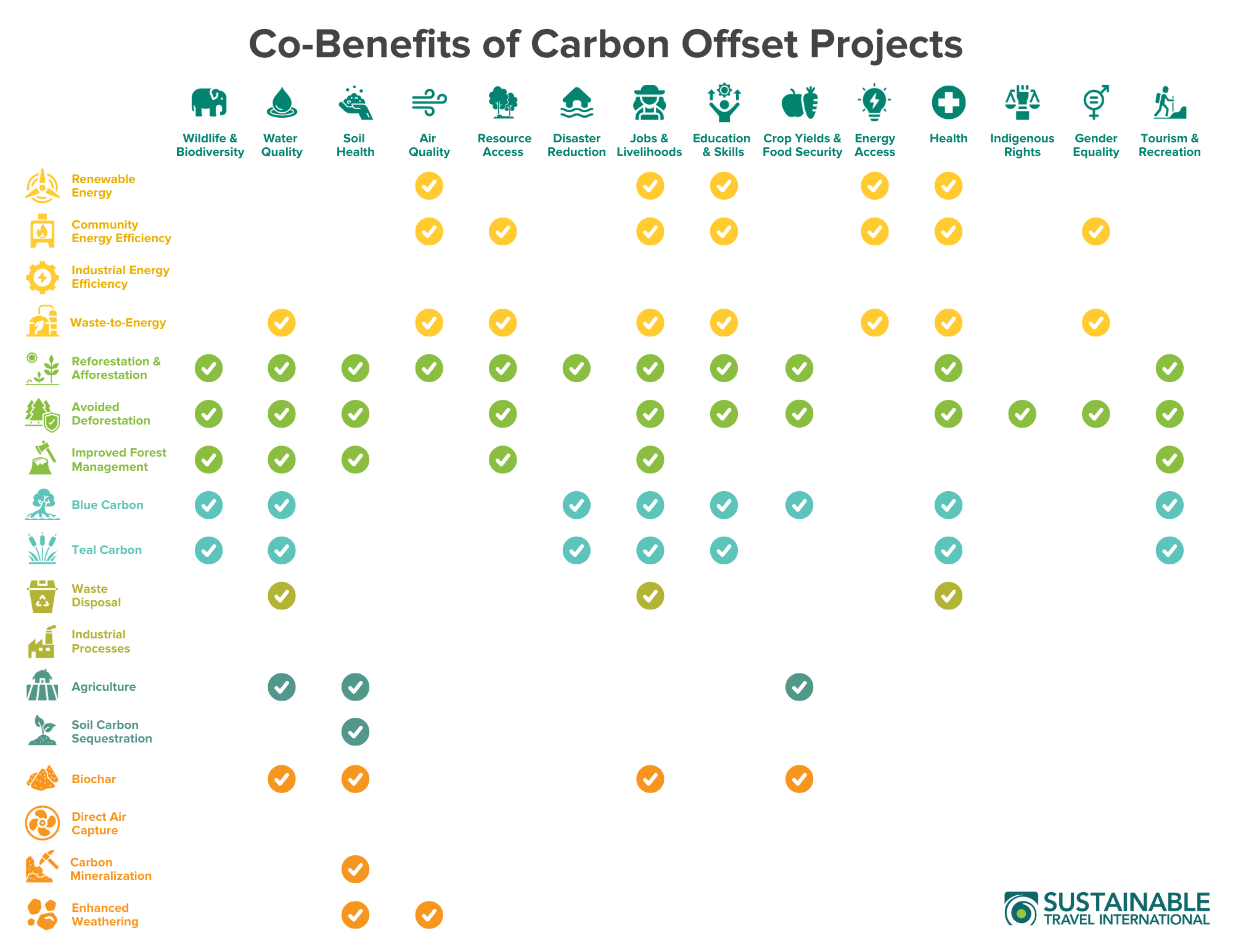
Carbon offset projects often deliver benefits beyond reducing emissions—known as co-benefits—that support communities, ecosystems, and local economies. The type and extent of co-benefits vary widely depending on the project’s design, location, and level of community involvement.
Forest projects, for example, often protect endangered species and uphold land rights and resource access for Indigenous and local communities. In addition, they address poverty, one of the root causes of deforestation, by improving healthcare, education, and livelihoods. Blue and teal carbon projects offer similar co-benefits while safeguarding coastlines from storms and erosion, and supporting fisheries and marine-based livelihoods.
Energy projects often expand access to reliable energy, especially in underserved or rural areas. Cleaner technologies also contribute to better air quality, improving health outcomes, particularly for women.
In contrast, more technical or industrial projects tend to offer fewer or less visible co-benefits. While co-benefits alone don’t define quality, they are one important piece of what makes a carbon offset project high quality. Looking at a project’s co-benefits alongside its carbon performance offers a more complete picture of its overall value.
Strengthening Oversight and Accountability in the Carbon Market
As data, technology, and field experience improve, so do the standards that guide carbon offset projects. Offset standards regularly update their methodologies to reflect the latest science and enhance accuracy. For example, Verra’s revised methodology for avoided deforestation addresses concerns that some projects were over-crediting by overestimating deforestation risk. Rather than letting each project set its own baseline, Verra now sets a single, region-wide baseline using trusted, standardized data, making crediting more consistent and credible.
Alongside these updates, new digital tools are transforming how projects are monitored and verified. Digital MRV tools—such as remote sensors, smart meters, satellite imagery, drones, and smartphone applications—can collect real-time project performance data. This allows for greater monitoring accuracy and helps projects respond more quickly to changes on the ground.
New initiatives are adding extra layers of scrutiny to improve quality and build trust in the carbon market. The Integrity Council for the Voluntary Carbon Market (ICVCM) serves as an independent watchdog, evaluating existing carbon standards and methodologies against its Core Carbon Principles (CCPs). It awards the CCP label only to credits that meet high standards for climate impact, environmental and social integrity, and robust carbon accounting. The CCP label is currently being introduced, and assessments are ongoing. Over time, it will help buyers quickly identify credits that meet these high-integrity benchmarks.
Independent rating platforms like Sylvera also support market transparency by assessing the quality of individual carbon projects, scoring them based on key factors like additionality, permanence, and co-benefits.
Support High-Quality Carbon Offset Projects
Choosing high-quality carbon offsets means looking at how a project is verified, whether its results are real and lasting, and what it does for local communities and nature. When you purchase carbon offsets with Sustainable Travel International, you support projects that are hand-selected for their impact through our internal due diligence process and reviewed using independent ratings from Sylvera.
Explore our carbon offset solutions for individuals and businesses to support high-quality projects today.